Santara AI
The team

People arethe foundation.

Our team brings over 25 years of experience in real estate and hospitality. We have run active Airbnb rentals for more than a decade and have managed portfolios of up to 100 properties. We have built and operated hotels alongside leading global brands, including Hilton, Marriott and IHG. Our background includes Harvard Business School, Duy Tan University, Rose Park Advisors, Hitachi and Bain Capital, and we bring that same discipline to every home we create.

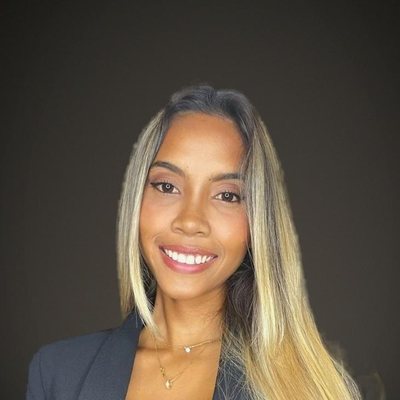
Nada Fadhila Utami

Co-Founder

Nada Fadhila Utami

Co-Founder

Nada Fadhila Utami is an Indonesian entrepreneur, real estate developer, and hospitality operator based between Bali and Da Nang, Vietnam.

She is the founder of Well Bali, a real estate investment, design, and development firm she launched in 2019. What began as a boutique property operation in Canggu grew into a full development platform, with Nada leading the design and delivery of more than twenty villas across Bali, concentrated in the Bingin and Uluwatu area. Well Bali became known for folding wellness and surf-lifestyle concepts into luxury villa product rather than treating them as amenities bolted on afterward.

Running that portfolio day to day is what led to her next company. Managing that portfolio exposed the operational gap between owning beautiful property and running it profitably, and Nada founded Santara to close it — an operations management system shaped by an owner-operator's view of what actually breaks at scale.

She serves as Managing Member and Board Chair of Santara, and directs its Vietnam operations from Da Nang.

A lifelong surfer, Nada has spoken publicly about surfing as the throughline of her life and the reason she built where she did.

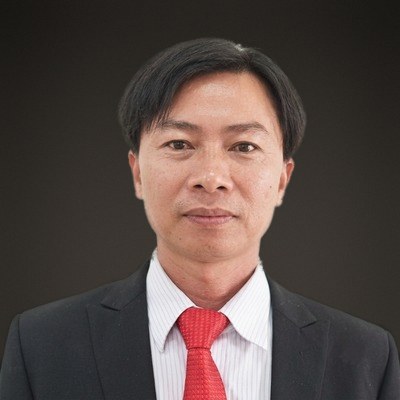
Phạm Phú Tài

Co-Founder

Phạm Phú Tài

Co-Founder

Phạm Phú Tài is a technology co-founder at Santara, where he leads how the product is shaped and how it gets built. He lives in Đà Nẵng.

He came up through the engineering services world, at Axon Active and later Hitachi Digital Services, building systems for other companies and watching, up close, which ones earned a place in someone's routine and which became one more thing to manage. Over dozens of products since, the question he keeps returning to is not what a system can do, but what it can take off someone's plate.

Design, to him, is the work of deciding — talking to the people who will actually use the thing until the real problem separates itself from the one they first described, then cutting everything that does not earn its place. Most of the value, he argues, is in what gets left out. He holds a particular view about the result: the best software is invisible. Someone wakes up, the day is already sorted, and nobody spares a thought for the thing that sorted it. Software that demands attention, however elegant, has already failed part of its job.

Leading a technical team, in his framing, is mostly about protecting that standard when it would be easier not to. A feature people rely on daily is a promise — it has to work on the morning nobody is watching it. That means clear boundaries, honest scope, and the discipline to say no to work that would be impressive but unearned.

At Santara he applies this to short-term rental operators, people who lose their mornings not to hard problems but to coordination. The company replaces four apps and a lost hour with one brief before the day begins, and the team runs eleven villas of their own, so most of what they solve are problems they had first.

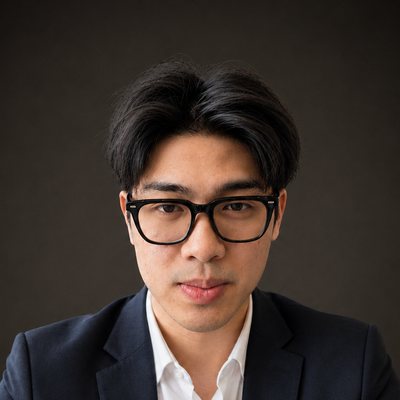
William Skelley

Co-Founder

William Skelley

Co-Founder

William Christopher Skelley is a founder, operator, and adviser working where real estate and technology meet, in the US and Southeast Asia.

The through line started in Boston, working with his father. His father attended Harvard and law school, then spent more than twenty years at Polaroid as head of the Western Hemisphere, running North American operations and everything that touched the customer. He left Polaroid in the early 2000s, as Will was beginning his career. Will tagged along. They worked at many startups, on marketing and on whatever the company needed next.

He then worked at General Electric and Bain Capital, and at Olympus from New York, reporting to the board of directors in Tokyo. That mix of industrial scale, private capital, and cross-border governance showed him how large organizations actually decide where money goes.

He attended Harvard Business School's Owner/President Management program, connected with the Clayton Christensen network, and joined Rose Park Advisors, the firm Christensen founded to put disruption theory to work in public and private markets. He worked on the portfolio and on sourcing, screening companies against whether they were attacking an incumbent from below, serving customers the market had overlooked, and building a cost structure the incumbent could not follow. He was there in the years the fund held Coupang, then an unproven Korean commerce bet that later became one of the region's largest companies.

He took that same lens to real estate, an industry that had gone largely untouched by software, and founded iFunding, one of the first real estate crowdfunding platforms in the US. It opened private real estate to investors who had been shut out of it. He exited in 2017. Across his career he has been involved in over $1B of real estate transactions and has personally raised roughly $100M in equity and debt for projects, founders, and startups in the US and Asia.

He now lives in Da Nang, Vietnam, and splits time with Bali. He operates a portfolio of short-term rentals in Indonesia and advises founders on capital and growth. He is Chairman of the Board of Advisers at Santara AI, working with founder Nada Fadhila Utami and the board to build operations management software from an owner-operator's playbook, not another dashboard.

Nguyễn Đức Mận

Academic Advisor

Nguyễn Đức Mận

Academic Advisor

Dr. Nguyễn Đức Mận is a computer scientist, educator, and adviser working across software engineering and AI, with more than two decades at Duy Tan University in Da Nang.

After starting his career as a software developer at HSD Corporation (1999–2001), he joined Duy Tan Software Center as a project lead (2001–2003), managing project planning, team leadership, and software architecture for enterprise applications. He then moved into academic leadership at the Faculty of Information Technology: Head of the MIS Unit (2007–2009) and Acting Dean (2009–2014). Since 2014 he has been Vice Dean of the International School, and since 2017 Chair of its Software Engineering program, where he has led curriculum modernization around CDIO, capstone projects, project-based and flipped learning, and ABET-aligned outcome assessment and continuous quality improvement.

He holds a Ph.D. in Computer Science, with professional training from Carnegie Mellon University's Train-the-Trainer program, the ABET Symposium, Google (Project Management, Data Analytics, Generative AI, BI), and AWS. His research, with more than 25 peer-reviewed publications, covers software testing (context-driven, combinatorial, and model-based testing, and machine learning for test generation for web and mobile applications), deep learning and computer vision (YOLO-based detection and grading, CRNN classification), mobile application performance, and technology-enhanced learning, including AI in education and CDIO/PBL models. He serves as an IEEE Access reviewer (2023–2026) and has reviewed for Springer Nature and SOMET.

His work has been recognized with Duy Tan University Awards for Excellence in Training and Academic Management, Certificates of Merit from Vietnam's Ministry of Education and Training, and a Certificate of Merit from the Da Nang People's Committee.

The team building it

Phạm Tuấn

Full-stack Engineer

Phạm Tuấn

Full-stack Engineer

Phạm Tuấn is a full-stack engineer at Santara AI. He works on both sides of the product: the web app that hosts and their teams use every day, and the back-end services and data behind it.

Working across the whole stack means a change can be followed from the database to the screen it shows up on — which matters in a product whose job is to be quietly right every morning.

Where we come from

  • Harvard Business School
  • Hilton
  • Bain Capital
  • IHG Hotels & Resorts
  • Axon Active Vietnam
  • Rose Park Advisors
  • Hitachi
  • Coupang
  • Marriott
  • Duy Tan University
Operating philosophy

We built the system we needed, then shared it

The product is opinionated: surface what changed, explain why it matters, and prepare the action without hiding the decision basis.

01

We areoperators.

Santara AI was built by operators. We manage our own portfolios, and we started every morning opening eight or nine tabs just to understand the state of the business: Airbnb, Booking.com, the calendar, the cleaning schedule, the maintenance list, and a WhatsApp thread scrolling faster than anyone could reasonably read.

02

Nothingtalked to anything.

Nothing talked to anything else, and the thing we needed most — what actually required our attention that day — was buried somewhere across all of it. So we built what we wanted: a single morning view that pulls it into one place, writes the team's day for them to share where they already work, and tells you what matters before you have gone looking for it.

03

Built fromwhat we lived.

Every feature exists because it solved a problem we were living with, not because it looked good on a roadmap. The team's backgrounds run through venture capital, private equity, real estate development and engineering, at firms including Bain Capital, General Electric, Hitachi and Olympus — and several of us have sourced, financed, built and operated our own properties. We have signed the leases, hired the staff, handled the 2am guest message and answered to the owners.

04

For the hostssoftware priced past.

Santara AI is for the independent hosts and boutique managers running two to fifty properties — the segment enterprise software has been priced and designed past. We built the system we needed. We are glad we get to share it.

Our mascot

And then there's Santi.

We built Santara AI to get our own mornings back. Somewhere along the way the AI inside it got a name: Santi — short for Santara, and from shanti, peace. Santi was born at 3 a.m., out of every guest question we answered half-asleep. Now Santi takes the noise, so hosts keep the peace.

Peace.

Read Santi's story

FAQ

Common questions

Who is Santara AI for?

Santara AI is for independent hosts, co-hosts, and small property managers who want more operational leverage without hiring a larger back-office team.

What makes Santara AI different from another dashboard?

Santara AI is designed to prepare the next action, not just display more data. It combines bookings, messages, cleaner timing, guest intent, property rules, and upsell context into a daily operating flow.

Does Santara AI act automatically?

The product is designed around host review. AI can prepare briefs, messages, and recommendations, but guest-facing or upsell-impacting actions should be approved by the host.

Why does explainability matter?

Hosts need to know why a recommendation exists. Santara AI aims to show the source facts, constraints, and decision reason behind operational and upsell prompts.

Important notice

AirCierge AI LLC, which operates Santara AI, provides software, automation tools, and AI-assisted operational insights for informational and business support purposes only. AI-generated outputs may contain inaccuracies and are not a substitute for professional judgment, legal advice, or independent verification. Users are solely responsible for reviewing and acting on information provided through the platform.

Get your next morning back.

0% commission on channel bookings and upsells. No annual contract — leave any month.