SEO for vacation rental websites: how to get your villa found on Google
Guests search for areas, features and practical questions, not your villa's name. Here are the pages your direct booking site needs to show up on Google, and how to set them up.
 Tai Pham
A guest planning a trip to Bali rarely searches for your villa's name. They search for "villa with private pool Uluwatu", "things to do near Bingin" or "how to get from Bali airport to Uluwatu". If your direct booking website only has a home page and a list of rooms, it has nothing to show for those searches, and the guest ends up on an OTA again.
SEO for a vacation rental website is not about tricks. It is about having one useful page for each question a guest asks before they book. This guide shows what those pages are, how to write them, and how to set them up on your own direct booking site.
How guests actually search
Guests search in three stages, and each one needs a different kind of page.
| Stage | Typical search | Page that answers it |
| Dreaming | "best area to stay in Bali for surfing" | A guide to your area, written by someone who lives there |
| Planning | "villa 2 bedroom private pool Uluwatu" | One page per villa, with a clear title, photos and price |
| Booking | "Kenko Wellness Uluwatu" or your villa's name | Your home page, with reviews and a way to book |
Most hosts only cover the last stage, which means they only reach guests who already know them. The first two stages are where new guests come from.
Give every property its own page
Every villa, suite or apartment should have its own page, with its own title and description. "Villa 2" says nothing to a search engine. "Two-bedroom pool villa, 5 minutes to Bingin Beach" says almost everything.
- Title: the type of place, the key feature, and the location, under about 60 characters.
- Description: one or two sentences a guest would actually want to read, under about 155 characters.
- First paragraph: what makes this place different, in plain words. Not "luxury awaits", but "a quiet one-bedroom with a desk and fast Wi‑Fi, a 6-minute walk to the beach".
- Photos with descriptions: search engines read image descriptions too.
- Reviews and a map: they help guests decide, and they keep them on the page.
Write the pages guests need before they book
The best-performing pages on a small booking site are usually not about the villa at all. They answer the practical questions every guest has.
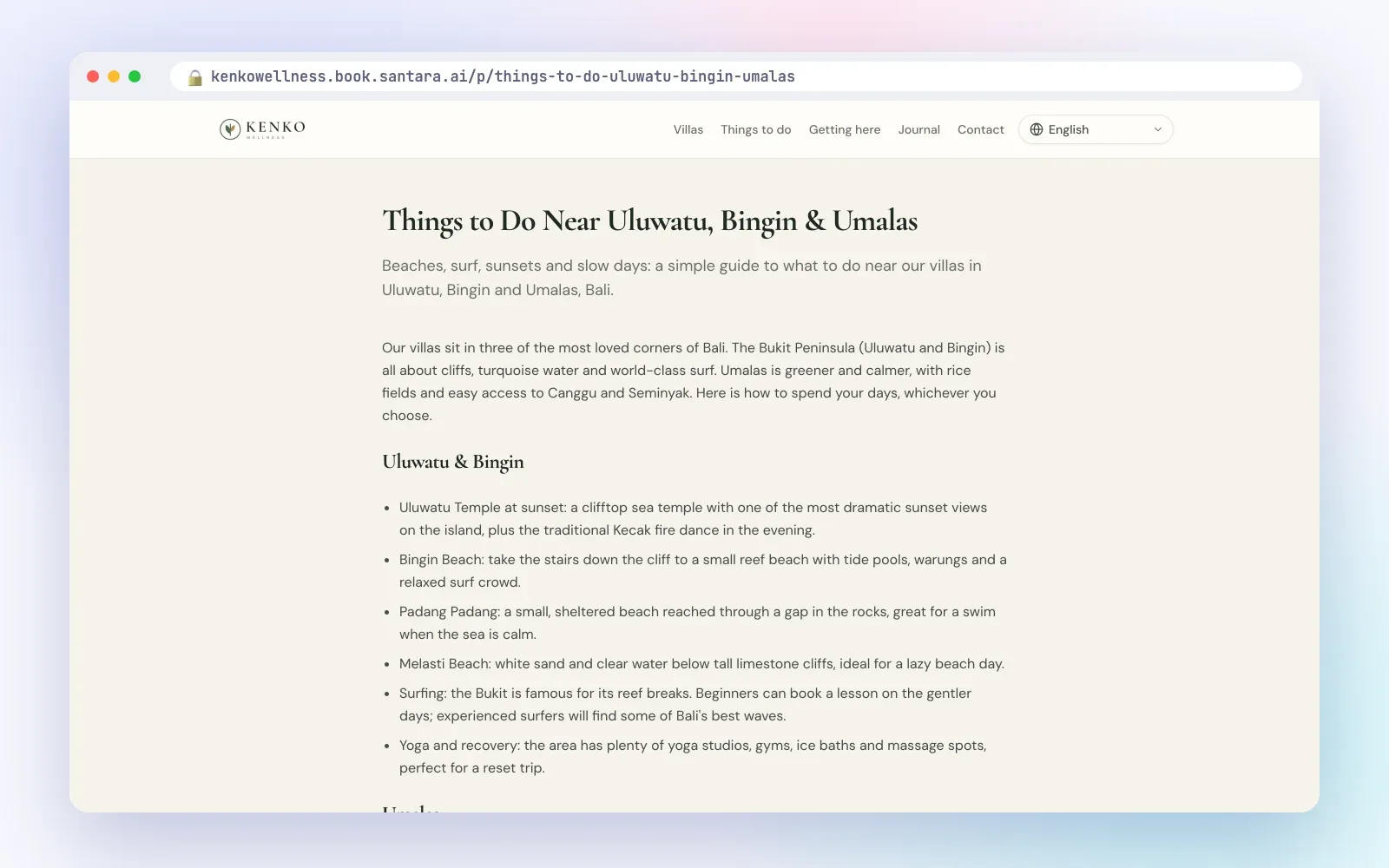
- Things to do nearby: beaches, surf spots, temples, cafés. Write it from experience, with distances from your place.
- Getting here: airport transfer times, taxi and ride-hailing tips, where the driver drops guests.
- Choosing an area: if you have places in more than one area, explain who each area suits.
- Seasonal guides: rainy season, holidays, festivals, and what changes for guests.
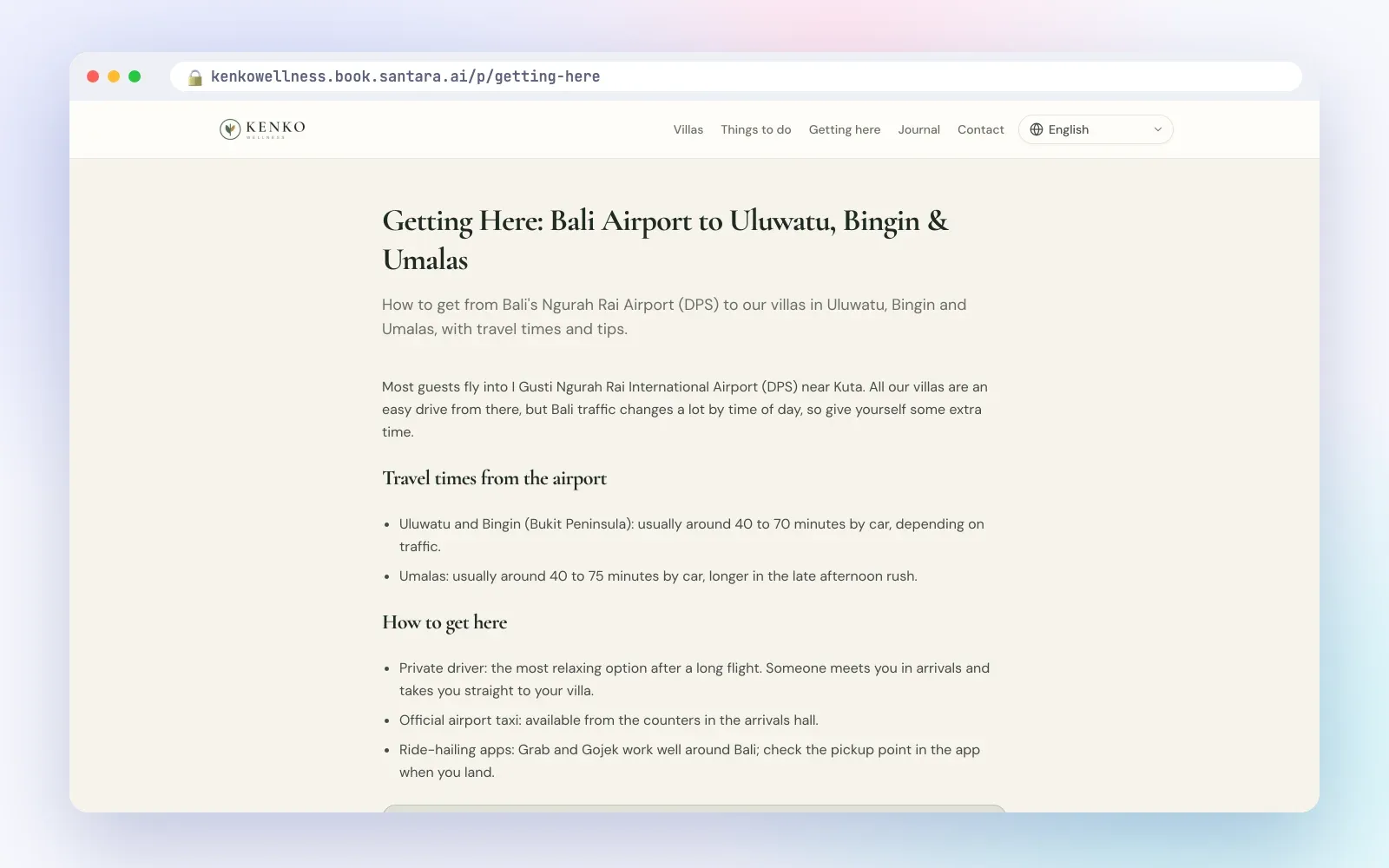
Each of these pages links to your villas. A guest who lands on "getting from the airport to Uluwatu" is one click away from booking.
Keep a small blog
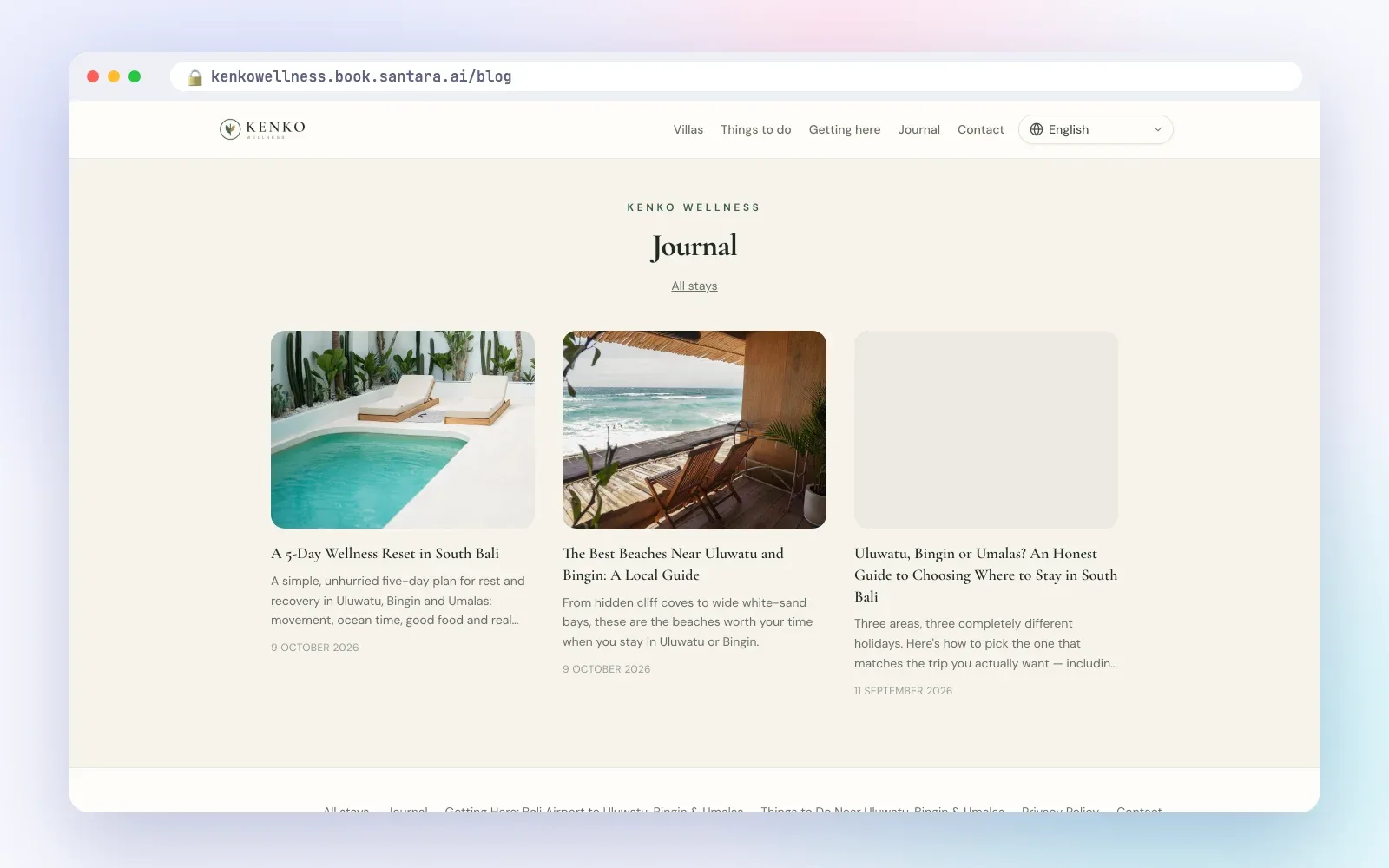
A journal with one or two useful posts a month is enough. Write what you already tell guests in messages: the best beaches this month, a five-day itinerary, where to eat after surfing. Real local knowledge is hard for big sites to copy.
The technical basics
You do not need to be technical, but your site should get these right:
- A sitemap so search engines find every page.
- Structured data that tells search engines this is a place to stay, with its name, location and price.
- Fast, mobile-friendly pages. Most guests search on a phone.
- No duplicate pages. One page per villa, not three versions of the same one.
- A page title on every page, including guides and blog posts.
Links: the part you have to earn
Search engines trust sites that other sites link to. For a villa or homestay, the realistic sources are:
- Your own Instagram, Facebook and WhatsApp Business profiles.
- Local partners: surf schools, yoga studios, wedding planners, restaurants.
- Local tourism directories and community sites.
- Travel bloggers who stayed with you and wrote about it.
One link from a local partner who actually sends guests is worth more than dozens from random directories.
How Santara AI handles the SEO basics
When you publish a direct booking site with Santara AI, the technical basics are built in:
Step 1
One page per property and room
Each property and room gets its own page, generated from the listings already in your workspace.
Step 2
Titles, descriptions and share images
Set an SEO title and description for the site and for each page. AI can suggest them from your real property facts, and nothing changes until you approve it.
Step 3
Sitemap and structured data
Every published site has a sitemap and structured data describing your properties as places to stay.
Step 4
Guides and a blog
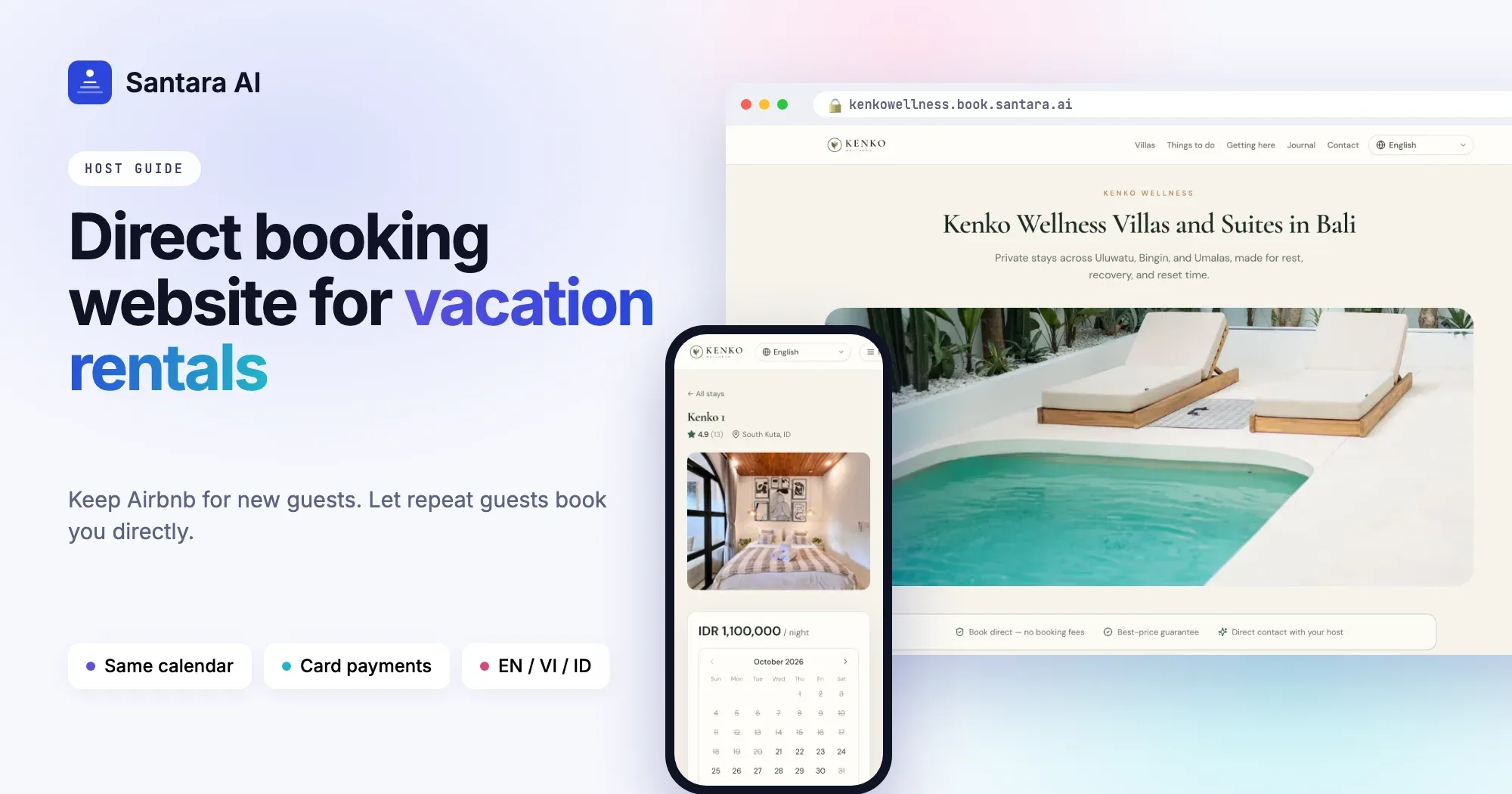
Add your own pages, such as things to do and getting here, and a blog for local guides.
Step 5
English, Vietnamese and Indonesian
Publish the site in the languages your guests speak, with AI translation you can edit.
Be patient
SEO is slow. New pages can take weeks to appear in search, and months to bring steady traffic. Start with your property pages and two or three guides, then add one useful page a month.
FAQ
How long does it take for a new booking site to show up on Google?
Usually a few days to a few weeks for the site to be found, and a few months before it brings regular visitors. Sharing your link and adding useful pages speeds this up.
Should my direct site copy my Airbnb description?
No. Write a fresh description for your own site. Copying the same text everywhere gives search engines no reason to prefer your page.
Do I need a blog?
Not on day one, but a few local guides are the easiest way to reach guests who do not know your name yet.
Can I use my own domain with Santara AI?
Not yet. Sites live at yourbrand.book.santara.ai today.
Keep reading
- Direct booking website for vacation rentals: how to win repeat guests without leaving Airbnb
- The guest message playbook: 10 moments that decide your review score
- How to become an Airbnb Superhost in 2026
Your first 3 months are free.
Join For Free